1. Maratha Empire
Chhatrapati Shivaji Maharaj established a people-oriented Swarajya by fighting against powerful Mughals. His dream was to create a people-oriented state across the whole of Hindustan. This is mentioned in the 'Daanpatra' letter of Chhatrapati Sambhaji Maharaj, as well as in the Dutch documents. Sambhaji Maharaj had planned to dethrone Aurangzeb and place his son Akbar on the throne of Delhi. In a letter sent on January 4, 1691, Chhatrapati Rajaram Maharaj wrote to Hanumant Rao and Krishnaji Ghorpade saying, 'If you capture Delhi, I will grant you two and a half lakh hoon.' This shows his dream of winning Delhi.
Aurangzeb passed away on 20th February 1707. His death gave a new direction to history. In just 12 years, in 1719, under the guidance of Shahu Maharaj, Balaji Vishwanath Peshwa conquered Delhi. The Mughal Emperor Farukh Siyar was replaced by Rafi ud-Darajat, and from him, they obtained documents for Swarajya, Chauth, and Sardeshmukh. The release of Rajmata Yesubai, who had been imprisoned by the Mughals for 30 years, was secured. The Marathas became the rulers of Delhi. The great Baji Rao Peshwa made a bold move towards Delhi in 1737, subduing the emperor. In 1739, Nadir Shah of Iran marched against the weak Mughal Empire. He conquered Delhi and imprisoned the emperor, massacring twenty thousand Hindus and Muslims while plundering. He seized the emperor's peacock throne and the Koh-i-Noor diamond. The emperor appealed to the Peshwas for help. Baji Rao set out towards Delhi for its defence. Upon hearing this, Nadir Shah fled to Iran.
2. Anglo Maratha war
First Anglo Maratha war had already made the history. Then the Second Anglo-Maratha War was fought between the British and the Maratha rulers. The British army faced the Maratha army directly three times at different times. The Marathas were so powerful that fighting them wasn't easy. The Maratha rulers were the strongest link in stopping the British's growing influence in India. Then the British officials started to work on the divide and rule policy, and eventually they were successful and ruled the country for a long time.
The bravery and betrayal of the Maratha rulers are both recorded in history. Otherwise, it wouldn't have been easy for the British to take over India. But, due to small selfish interests, what shouldn't have happened did.
The Anglo-Maratha wars happened three times. The first one was from 1775 to 1782. The second one was from 1803 to 1805 and the third year was from 1817 to 1818. These three declared wars were the result of the internal conflicts among the Maratha rulers and the expansionist thinking of the British. With the decline of Mughal rule, the Maratha powers were on the rise in India. Naturally, the British had to fight against them.
Both armies faced each other officially three times, one by one. The three wars are recorded in history as the Anglo-Maratha wars one, two, and three. The outcome was that the Maratha rulers gradually disappeared and the British dominance increased. When the Marathas were strong, the war lasted for seven years, and then a treaty was made, which included a decision not to engage in war for 20 years along with various negotiations. Both sides adhered to it, but secretly they kept weakening each other.
The Marathas kept weakening their people while the Brits used them to their advantage, kept weakening them, and as soon as the 20-year treaty was over, another war started, which barely lasted two years.
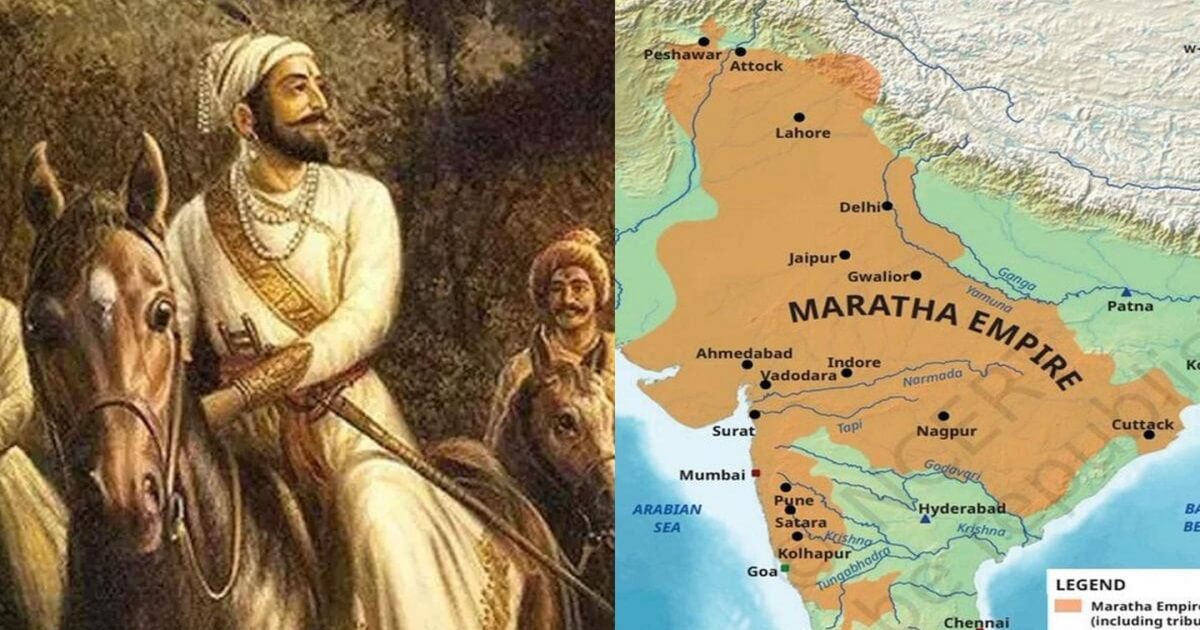
3. Maratha Empire Map
4. Maratha Empire Kings
The Maratha Empire is a very glorious chapter in Indian history. From the 17th century to the 19th century, this empire continued to rise in India. Under the leadership of Chhatrapati Shivaji Maharaj, the Marathas began to establish their own identity. They laid the foundation of the Maratha self-rule by capturing forts like Jinji, Sinhagad, Panhala, and Rajgad. Shivaji earned freedom from powers like the Adil Shahi, Nizam Shahi, and Mughals with his guerrilla tactics and clever war strategies. After Shivaji's coronation in 1674, he held the title 'Chhatrapati'.
5. Maratha Empire Tree
The Maratha Empire is a really important empire in Indian history. This empire had a big impact on India's political, social, and cultural life. The Marathas fought for independence against foreign powers like the Mughals and to protect Hinduism.
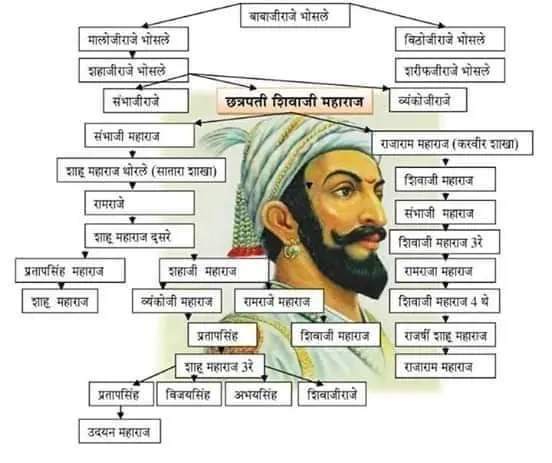
They established their own rule and worked towards the revival of Hinduism. The Marathas defeated their enemies using guerrilla tactics and clever strategies. Their small army overcame much larger forces. Watch Maratha empire family tree here.
6. Maratha Aarakshan
The first Maratha reservation movement was held in 1997 to demand reservation for the Maratha community in government jobs and educational institutions. This movement started off at a local level.
In 2008-09, leaders like Sharad Pawar and Vilasrao Deshmukh showed support for this movement. By 2014, every party in Maharashtra took a stand in favour of this movement. The descendants of Chhatrapati Shivaji Maharaj, Udayanraje Bhosale and Yuvraj Sambhaji Raje Bhosale, took the initiative for Maratha reservation. Meetings were held across all departments of the state for Maratha reservation. The case went to the Mumbai High Court. At that time, they stayed the state government's decision to give 16 per cent reservation to the Maratha community. Later, the Supreme Court refused to overturn the Mumbai High Court's order that stayed the Maratha community's reservation. In 2017-18, the Maratha Kranti Morcha started to emerge. After the state government decided to grant reservation, the Mumbai High Court stated that according to the Supreme Court's orders, no state should have reservation exceeding 50 per cent.
Advocate Dr. Jayashree Patil filed a petition in the Supreme Court against Maratha reservation, while her husband Advocate Gunratna Sadarvate fought the case. On 5th May 2021, the Supreme Court cancelled the Maharashtra government's reservation decision and ruled that Maratha reservation is unconstitutional and illegal. A five-judge bench unanimously delivered this verdict.
7. Thanjavur Maratha Palace
8. Anand Maratha
In the Maratha community, marriage signifies the hustle and bustle within the family, shopping, and running around. This is all present when the bride and groom embark on a joint beginning of their lives. It is a ceremony where partners come together, express love, and take an oath to remain together forever. This is also a special occasion for family members and friends to gather. Many insist that the marriage should be conducted according to Hindu rituals. Even celebrities who marry abroad often hold these formal wedding ceremonies there. Weddings conducted in the Indian tradition typically last four to five days. In the Maratha community, it begins with the engagement, followed by the turmeric ceremony, music, mehndi, the actual wedding, and the subsequent prayers. Each of these rituals holds particular significance.
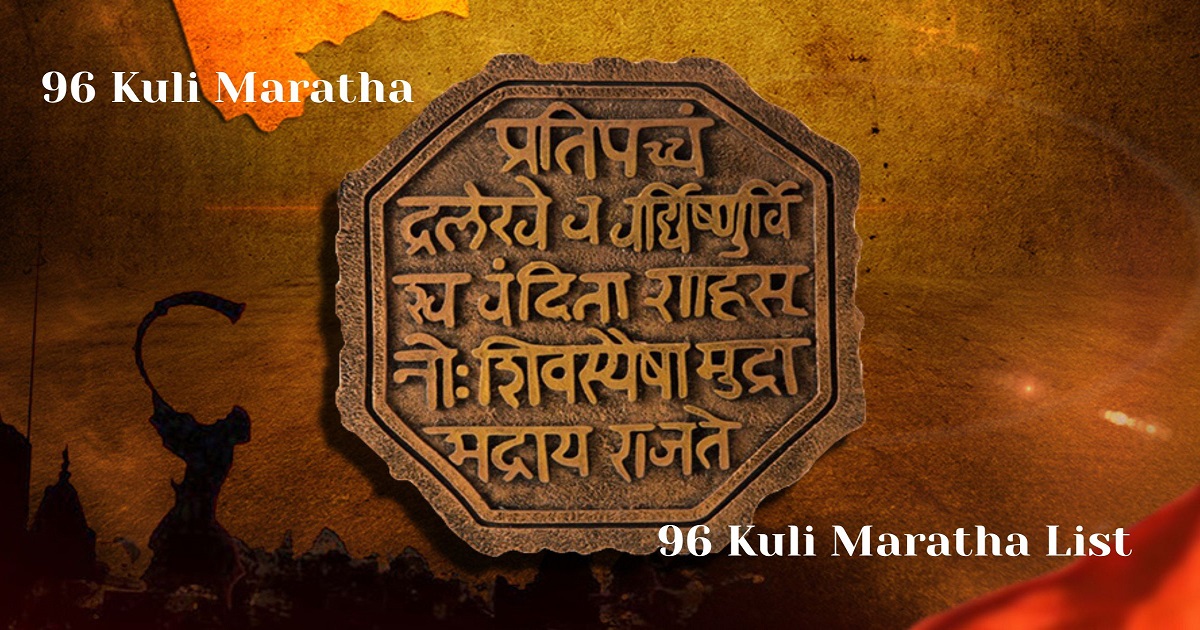
9. 96 Kuli Maratha Surname List
Bhosale, Ghatge, Shitole, Dabhade, Gaekwad, Mahadik, Shirke, Kadam, Jagtap, Mohite, Ingle, Khanvilkar, Surve, Thorat, Pandre, Bandal, Jedhe, Kakde, Dhamale, Dhumal, Marne, Maral, Pol, Pisal, Gadhwe, Nalge, Garud, Nalavde, Kokate, Harpale, Dhamdhere, Nigade, Sawant, Rathod, Salunkhe, Shinde, Salav, Laad, Nikam, Ahir, Pawar, Mane, Angre, Chandale, Rane, Jagdale, Dhawle, Dalvi, Malap, Phalke, Angane, Vichare, Malusare, Tawde, Khaire, Bagwe, Raut, Renuse, Wagh, Pandhare, Bhogale, Bagrao, Bhagwat, Mulik, Kshirsagar, Shankpal, Tuwar, Madhure, Mhambar, Bande, Teje, Sambhare, Phakde, Darbare, Dhekale, Thote, Parte, Palande, Phatak, Jagdhane, Dhybar, Pingale, Phadtare, Bhoware, Rasal, Khadtare. Then Yadav, Jadhav, Kamate, Jalindhare, Khadtare, Pathare, Gharat, Satam, Tupe, Tanpure, Ghag, Jogale, Amrite, Ghone, Jainak, More, Madhure, Devkate, Harphale, Dhyber, Marathe, Dare, Deshmukh, Kadam, Kshirsagar, Shinde and Chavan. Here is 96 Kuli Maratha Surname list pdf to download.
Please note that there are many more surnames within the 96 Kuli Maratha community.
10. Conclusion
Maratha was dominating a large part of modern India at the beginning of the 18th century. The Marathas were a group of Marathi-speaking warriors on the western Deccan plateau (present-day Maharashtra) who established the Hindavi Swaraj. The official start of the Maratha rule was in 1674. Historians have celebrated this period in the history of Hindustan as the time of the ultimate supremacy of Marathi power. The empire covered 250 million acres or a one third of South Asia.