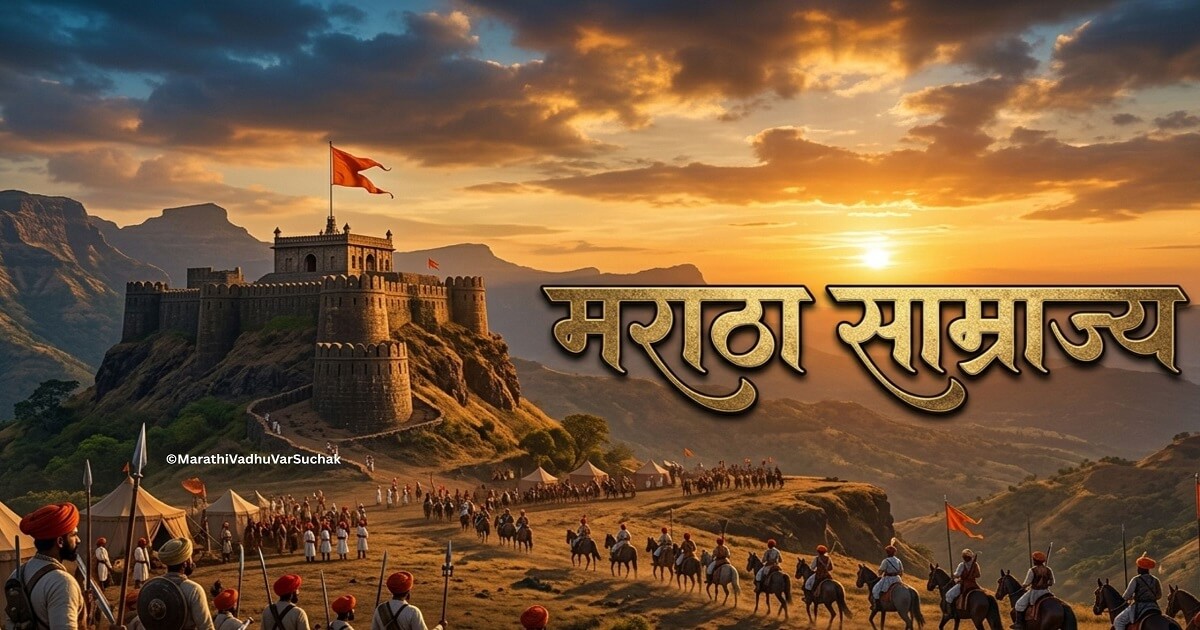
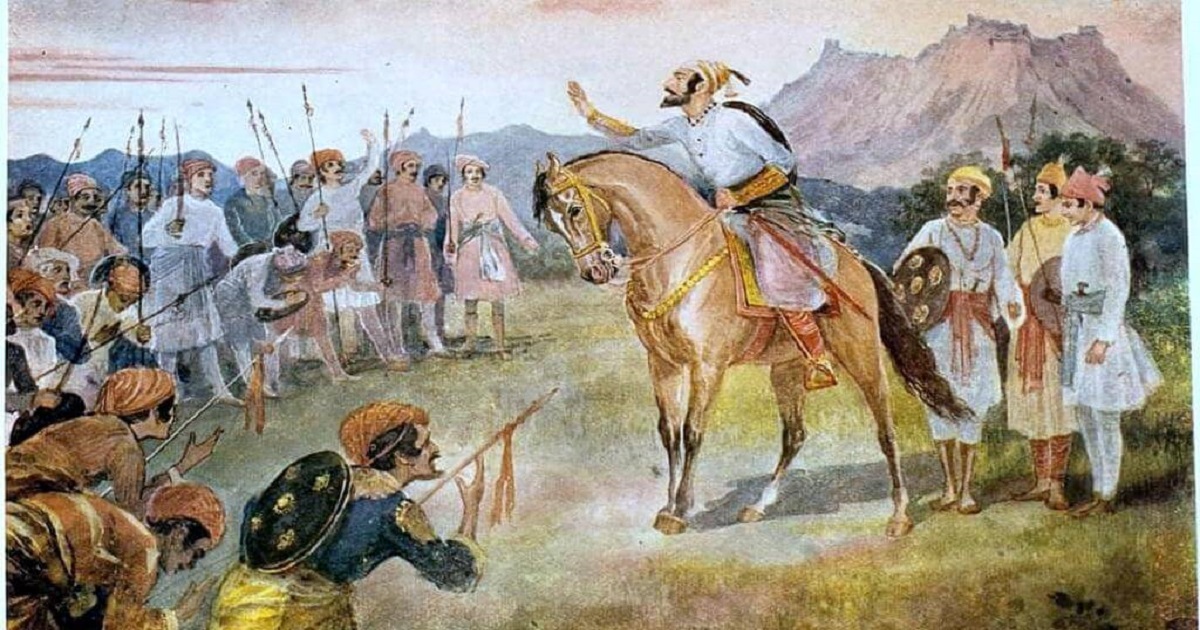
Today we’re going to talk about a great chapter in Maharashtra’s history – the Maratha Empire. This empire is inspiring not just for Maharashtra but for all of India. The journey that started under the leadership of Chhatrapati Shivaji Maharaj spread from the struggles with the Mughals to its expansion during the Peshwa era. In this article, we’ll give a detailed description of the history of the Maratha Empire.
The beginning of the Maratha Empire and its founder
The Maratha Empire started in the 17th century when a revolutionary leader introduced the idea of self-rule in the Sahyadri mountain ranges of Maharashtra. This empire is a milestone in Maharashtra's history, uniting the local people to fight against foreign powers.
Chhatrapati Shivaji Maharaj
Chhatrapati Shivaji Maharaj is the founder of Maratha Empire. He was born on 19th February 1630 in Shivneri Fort. He used guerrilla warfare tactics to challenge the Mughal and Adilshahi empires.
Initial struggle
Shivaji Maharaj started the kingdom by capturing Torna Fort in 1645. After that, he won forts like Raigad and Pratapgad.
The concept of Swarajya
"Hindavi Swarajya" is the idea they put forward, where people of all religions had equal rights. It’s a symbol of Maharashtra's social unity.
The Maratha Empire in Maharashtra didn't just win battles but also laid a strong foundation for administration and the economy.
The expansion of the Maratha Empire and major battles
The Maratha Empire expanded a lot in the 17th and 18th centuries. After Shivaji Maharaj, it reached Delhi under the leadership of Sambhaji Maharaj, Rajaram Maharaj, and Shahu Maharaj.
Battle of Pratapgad (1659)
Shivaji Maharaj's victorious battle against Afzal Khan. He defeated the enemy with guerrilla tactics.
Treaty of Purandar (1665)
The treaty with Aurangzeb, where Shivaji Maharaj left 23 forts, but later regained them.
The Third Battle of Panipat (1761)
The battle of the Marathas against Abdali. The Marathas were defeated, but it showed the strength of the empire.
Places of expansion
The influence of the Marathas spread from Maharashtra to Gujarat, Madhya Pradesh, Karnataka, and Delhi. This empire was at its peak during the Peshwas' time.
These wars immortalized the Maratha Empire in Maharashtra's history. They weren't just battles, they were fights for freedom.
The time and administration of the Peshwas
After Shivaji Maharaj, the Peshwas led the Maratha Empire. The Peshwa was the Prime Minister who organised the empire.
Baji Rao Peshwa
Known as 'Peshwa Baji Rao'. He planted the Maratha flag in North India. The saying 'The Maratha horse reaches Delhi' became popular because of him.
Nana Saheb Peshwa
They expanded the empire and strengthened the administration.
Administration system
In the Maratha Empire, there was an "Ashtapradhan Mandal", which had various departments. The tax system, military, and justice system were excellent.
Economic growth
Encouragement for agriculture, trade and crafts. The markets and forts in Maharashtra have strengthened the economy.
During the Peshwa era, the Maratha Empire became the center of cultural and economic development in Maharashtra.

The fall of the Maratha Empire and its reasons
In the 19th century, the Maratha Empire fell, adding a sad chapter to the history of Maharashtra.
Internal conflict
The fights among the Peshwas and the family traditions made them weak.
British intervention
In the Anglo-Maratha Wars (1775-1818), the British defeated the Marathas. The third war marked the end of the Peshwas.
Results
Maharashtra became part of the British Empire, but the legacy of the Marathas inspired the freedom movement.
Even though it was a downfall, the influence of the Maratha empire is still alive today.
The legacy of the Maratha Empire and its impact in Maharashtra
The Maratha Empire shaped the culture, language, and traditions of Maharashtra. You can still see its legacy today.
Cultural heritage
Festivals like Ganesh Chaturthi and Shiv Jayanti have come from the Maratha period. Folk arts like Lavani and Powada are famous.
Fortresses and places
Raigad, Sinhagad, and Shaniwar Wada are tourist spots. They're important for Maharashtra tourism.
Modern influence
Inspiration for freedom fighters. The Maratha history is visible in Maharashtra's political and social life.
Educational importance
In schools, the history of Shivaji Maharaj is taught, which inspires the youth. The Maratha Empire in Maharashtra is a matter of pride.
Conclusion
The Maratha Empire is a glorious and inspiring chapter in Indian history. Founded by Chhatrapati Shivaji Maharaj, this empire gave form to the idea of Swarajya and built a vast empire on the strength of Maratha bravery, unity, and strategy. Under the leadership of the Peshwas, the Maratha Empire expanded its influence across various parts of India and challenged the Mughal Empire. The Marathas made significant contributions not only in military prowess but also in administrative systems, fort construction, and cultural contributions.
Still, internal differences, the defeat in the third battle of Panipat, and the rise of British imperialism reduced the influence of the Maratha Empire. However, the Marathas' struggle for independence and the spirit of self-rule still inspire Indians today. The legacy of the Maratha Empire is reflected in their courage, self-respect, and tireless efforts for freedom, which is still a proud part of Marathi culture and history.